What the AI does
- Reads the schematic, BOM, layout and datasheets
- Builds the structure and function trees
- Drafts every failure mode, effect and cause, part by part
- Rates S, O and D with a written rationale
- Computes SPFM, LFM and PMHF, live in Excel
Safety analysis, delivered
sev10 delivers DFMEAs, FMEDAs and HARAs for automotive hardware. Our AI engine drafts every failure chain from your design data, and a hardware engineer reviews every line. You get a finished, review-ready package at a fixed price, in days.
A hardware safety package like the one below takes a traditional team hundreds of engineer-hours: building the structure tree, working through every part, rating every chain, then computing the metrics by hand. sev10's engine does the drafting. Our engineers put their hours into judgment.
Case study · Example package Rev A
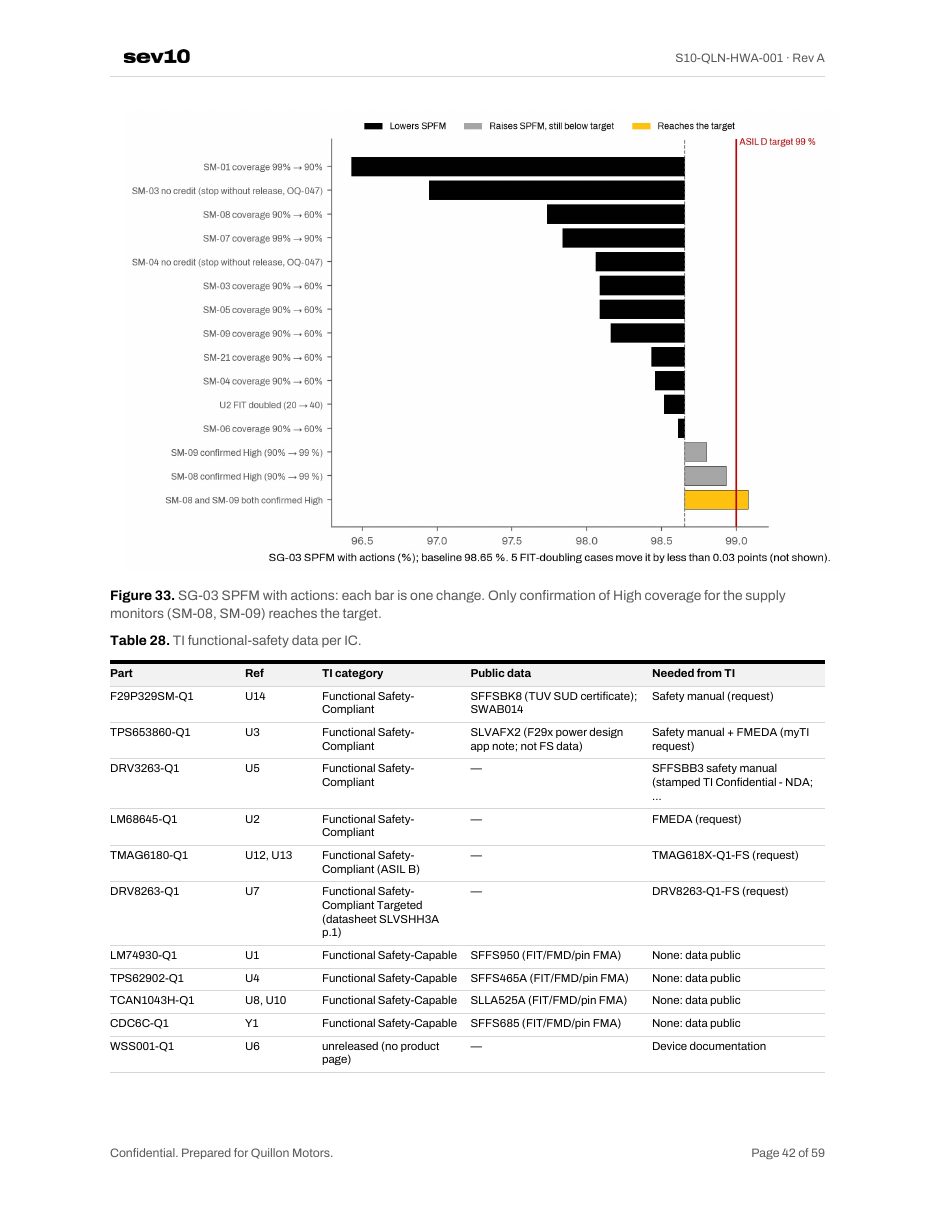
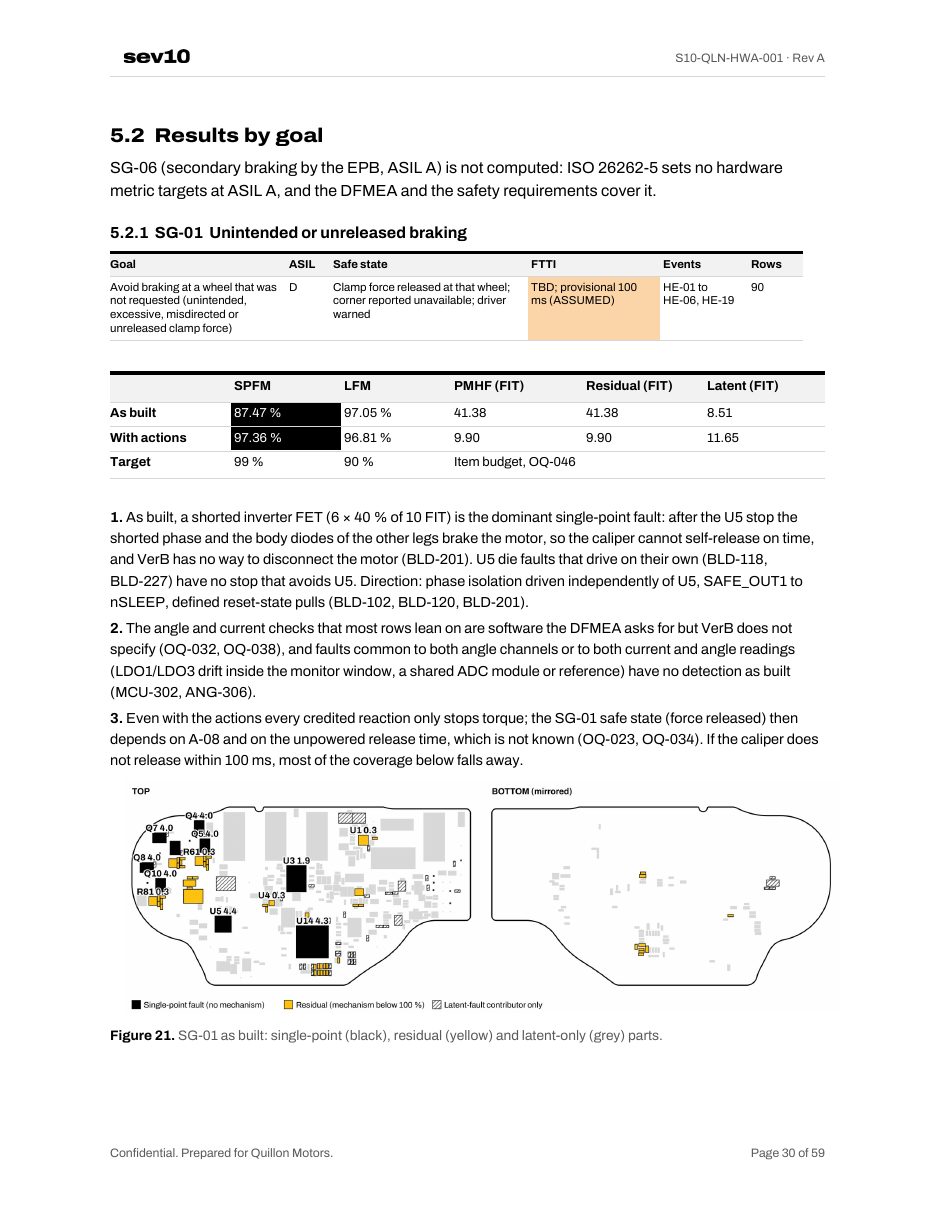
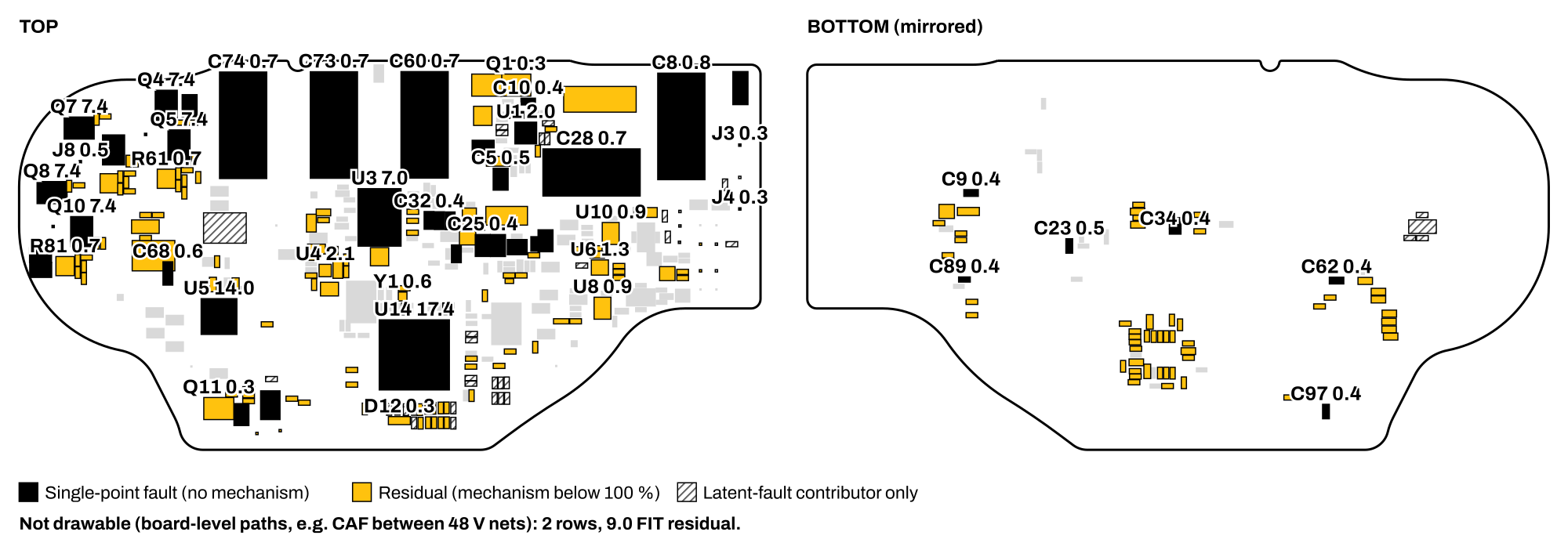
A full ISO 26262 hardware safety analysis of Texas Instruments’ TIDA-020106 electro-mechanical brake reference design (design guide), run as if for a client: HARA, DFMEA, FMEDA and a findings report for Quillon Motors, a fictional OEM. Every number on this page is computed from the delivered workbooks.
Scale 50–100 %. Outline: as published. Bar: with the actions. Red tick: ISO 26262-5 target for the goal’s ASIL. Results are provisional: TI’s IC-level FMEDA data is pending, so the metrics will move. TIDA-020106 is a lab reference design, not a safety-qualified product. The findings are gaps against assumed goals, not defects in TI’s intent.
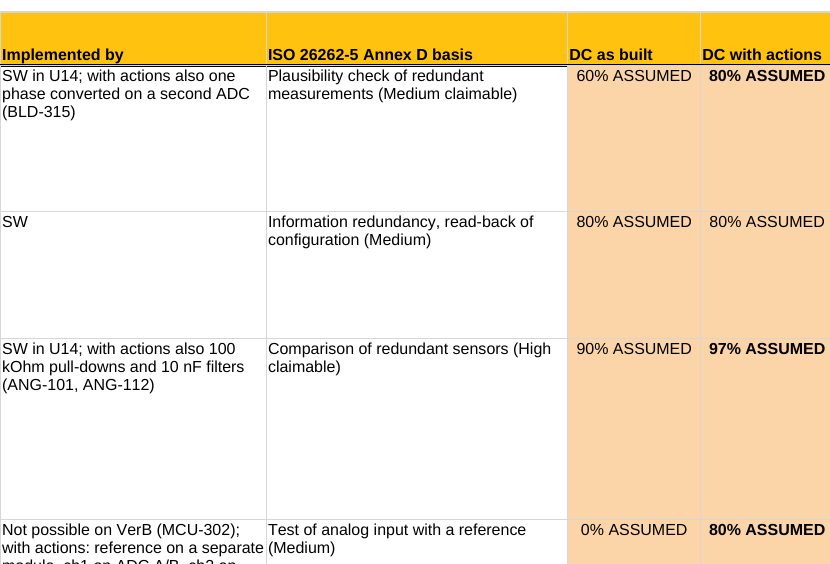
AI output you can’t check is worthless in a safety case. Every value we assumed rather than sourced is shaded orange in the workbook, tagged ASSUMED with a reason code, and traced to an open question. Nothing is buried in a footnote.
Editable source files in the formats your process expects, plus a report your program manager can read in ten minutes. This is exactly what the example package contains.
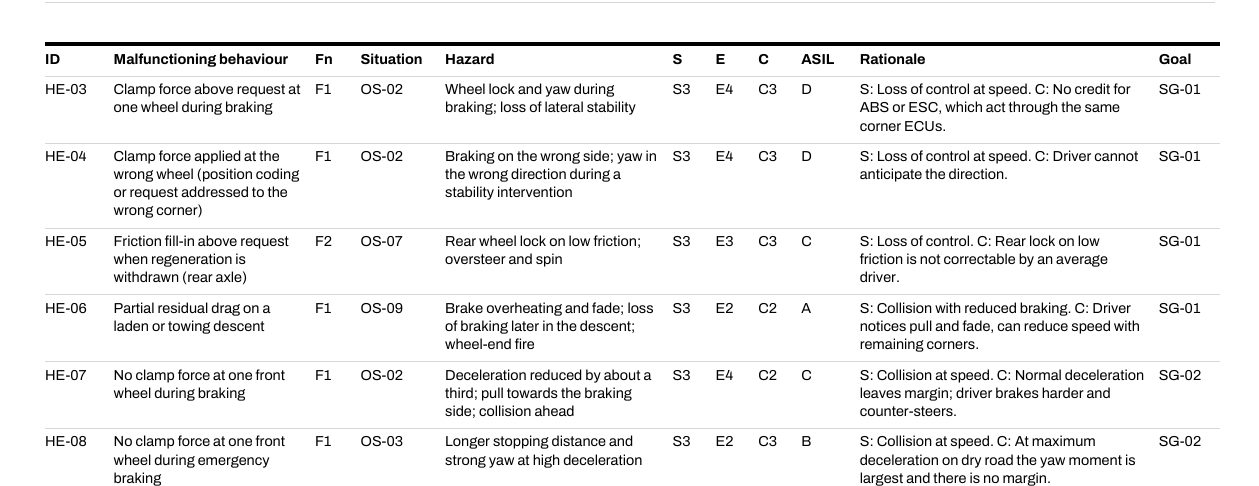
ISO 26262-3
Item definition, hazardous events rated S, E and C, and safety goals with ASILs, safe states and FTTIs.
16 pages · PDF and Word
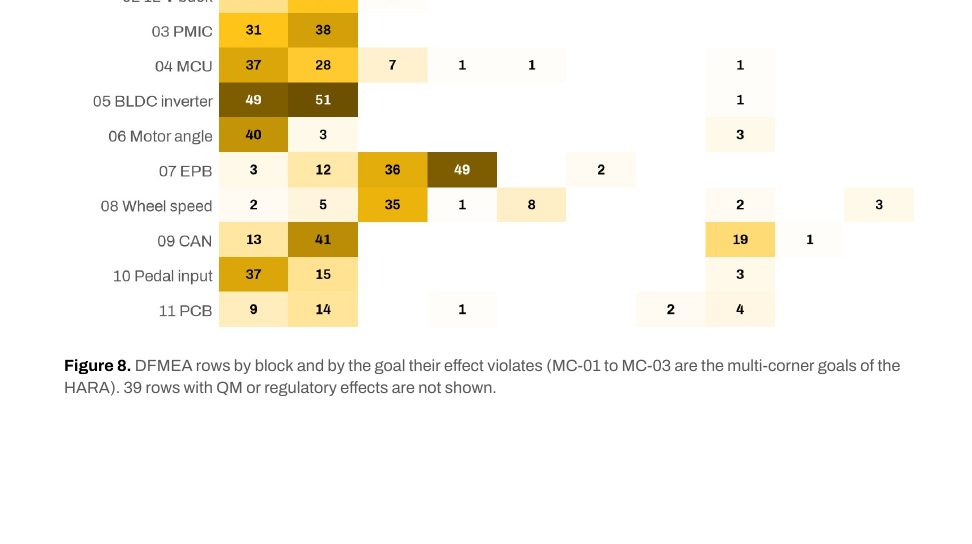
AIAG-VDA
Every failure chain from structure to action, with S, O and D rationale, action priority, pivots and a dashboard.
783 chains · 23 tabs · Excel
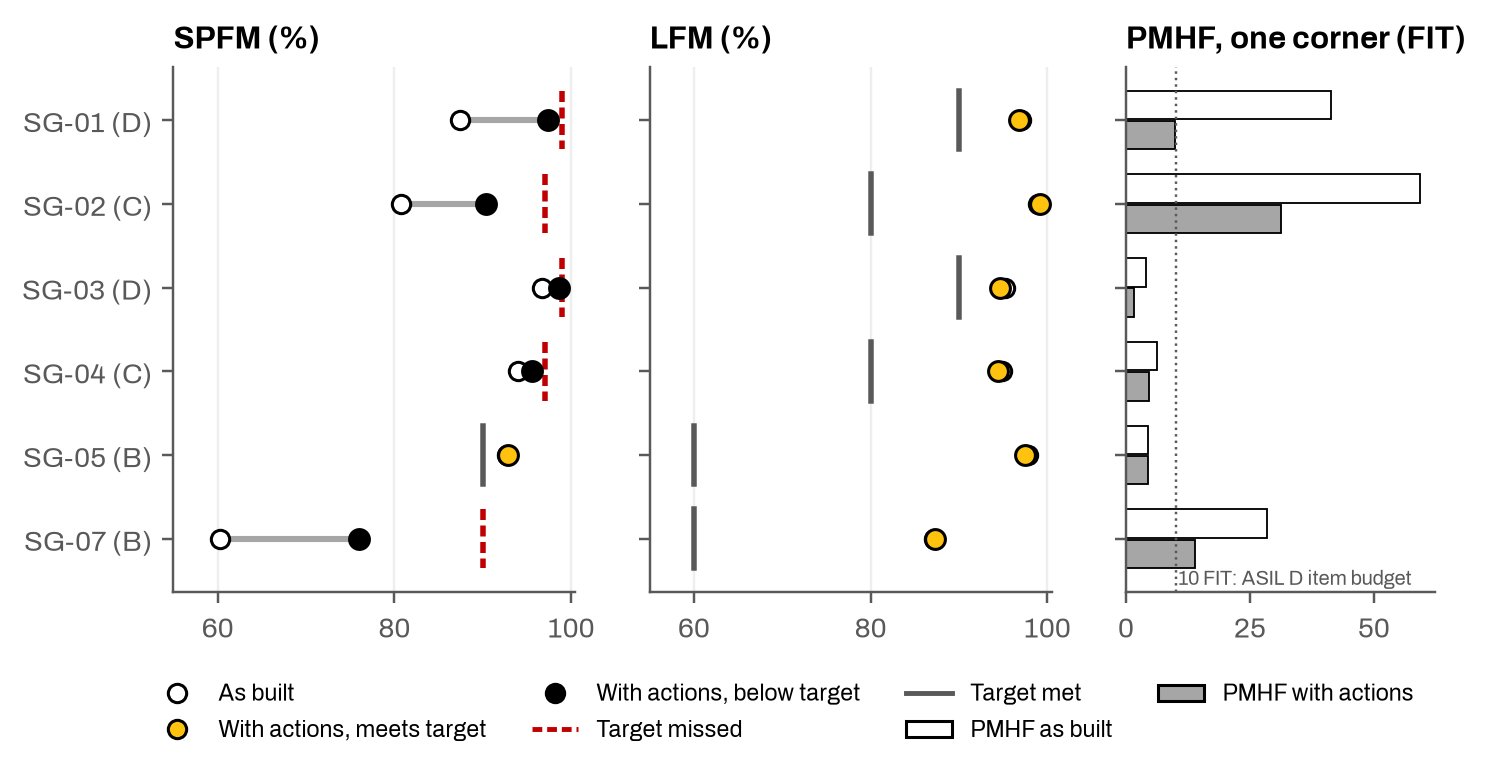
ISO 26262-5
SPFM, LFM and PMHF per safety goal, live in Excel, with sensitivity cases and an assumptions register.
484 rows · 16 tabs · Excel and PDF
Findings report
Findings ranked by effect, board fault maps for every goal, and the actions that close the gaps.
59 pages · PDF
Send the schematic, BOM, layout and whatever item definition you have. We come back with the scope, the assumed safety goals and a fixed price.
The engine drafts the HARA, DFMEA and FMEDA from your data. An engineer reviews every row, challenges every coverage claim and marks every assumption.
We walk your engineers through the findings, then revise the package against their answers to the open questions.
You own editable workbooks in your templates, ready for your safety manager, your customer and your assessor.
A schematic, a BOM and ideally the layout. Datasheets we fetch ourselves. Item definition, safety goals and a mission profile help, but they aren’t required: where you have gaps, we assume, mark it and log the question.
No, and nobody honest will tell you theirs is. We deliver a reviewed engineering analysis. Your safety manager approves it and your assessor confirms it. We make both of those steps fast.
Your data is used only for your analysis, under NDA. If it can’t leave your building, we can deploy the engine inside your environment instead.
Yes. AIAG-VDA and ISO 26262 structures by default. Your own templates, IDs and rating tables on request.
The example package took about 10 hours of engineer time over 3 days. Scope decides the rest. You get a firm date with the fixed price.
The complete example: a one-page summary, the 59-page findings report, the HARA, and the DFMEA and FMEDA workbooks with live formulas. Open it, poke at it, send it to your safety manager.
Download the package (zip, 9 MB)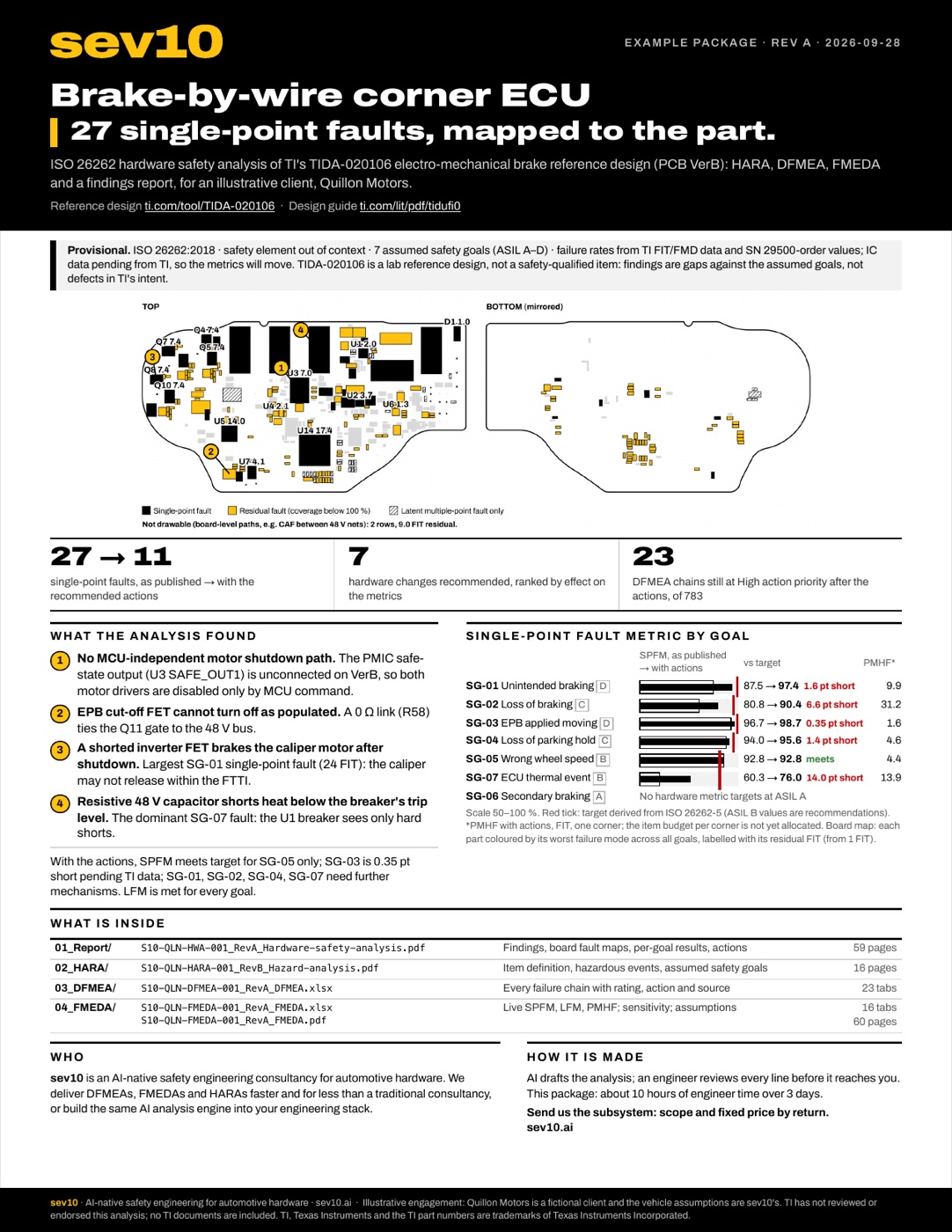
Tell us what it is, which analysis you need and when your review is. We’ll come back with a scope and a fixed price.
Start a projectwalshf@oregonstate.edu